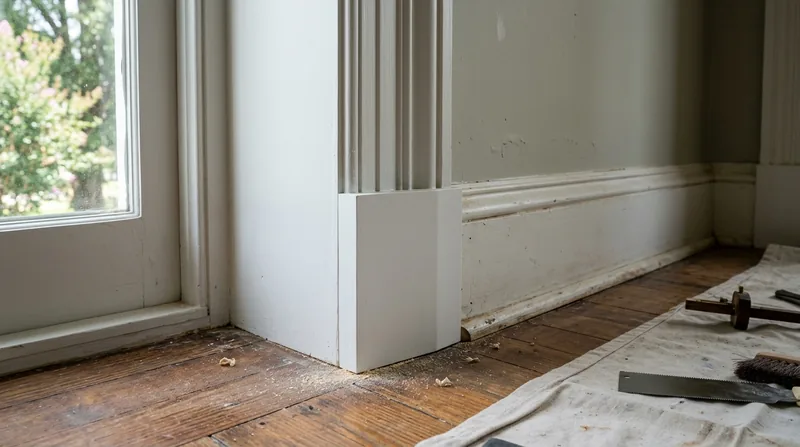




Finish & Trim Carpentry in Columbus is the craft that transforms a house into a home. From the tight miters on crown molding in a Historic District Greek Revival to the scribed returns on wainscoting in a Dinglewood Tudor, to the clean reveals and casing on interior doors in newer North Columbus brick and siding homes, finish carpentry demands precision and an eye for the character of each house. Columbus sits on the fall line where the Chattahoochee drops from the Piedmont toward the coastal plain, and our long humid summers and heavy thunderstorms mean that trim, casings and exterior details take a beating from moisture and temperature swings. The difference between handyman-grade work and true finish carpentry shows in every joint, and it matters for both the look and the longevity of your interior and exterior trim.
Why Finish & Trim Carpentry Matters in Columbus Homes
Columbus homes span nearly two centuries of residential styles, each with its own trim vocabulary and detail standards. A 1920s Craftsman bungalow in Wynnton demands quarter-sawn oak casings and built-up baseboard profiles that honor the original design language. A Victorian in the Historic District along the Chattahoochee River calls for tall, ornamental crown molding and period-correct wainscoting. A 1950s brick ranch in Midtown needs clean, modern reveals and simple baseboard that complement its horizontal lines. And new construction in North Columbus or Harris County requires trim that reads as contemporary and finished without fussiness. The humidity here also means that wood movement is constant, so proper scribing, coping joints and seasonal allowance separate work that stays tight from work that gaps and shrinks.
- Tight miters and scribed returns prevent gaps that trap moisture and collect dust in our humid climate.
- Proper casing and door jamb installation protects the rough framing from water and air infiltration.
- Crown molding and baseboard installation must account for the seasonal wood movement typical of the Chattahoochee Valley.
- Custom trim details preserve the character and resale value of older Columbus homes in Dinglewood, Rose Hill and the Historic District.
- Interior door installation with precision reveals and smooth operation improves both function and the finished appearance of every room.
Each of these details, done right, protects your home and keeps it looking sharp for decades.
Key info: A Historic District home in Columbus may have original plaster walls and trim that require scribing and careful fitting rather than simple caulk-and-paint approaches. We work with what's there, matching profiles and grain direction to keep the home's authentic character intact.
How We Install Finish & Trim Carpentry in Columbus: Our Process
Finish carpentry is a sequence of precise measurements, careful cuts and thoughtful installation. We start by understanding the existing character of your home, whether it's the Greek Revival cornices in the downtown Historic District or the simple, clean lines of a North Columbus contemporary. We measure twice, cut once, and fit each piece in place before fastening. We cope joints rather than miter them wherever they meet at inside corners, because a coped joint stays tight as wood moves with humidity and temperature. We scribe trim to fit uneven walls and ceilings, especially common in older Columbus homes where settling and deflection have created surfaces that are anything but flat. We install blocking and backing during framing so that trim fastens securely into solid wood, not just drywall. And we finish with stain, paint or clear coat that matches the rest of your home's palette and protects the wood from the moisture and UV exposure that Columbus weather brings year-round.
- We visit your home and examine the existing trim, framing condition and architectural style to plan the job accurately.
- We measure all openings, walls and ceiling lines and account for seasonal wood movement in our layout.
- We select material that matches the species, grain and finish of existing trim or meets your design goals for new work.
- We cut all pieces at the shop or on-site with precision tools, including coped joints for inside corners.
- We install backing and blocking as needed, then fasten trim with finish nails or screws set below the surface.
- We fill fastener holes, sand, and finish with stain or paint to match your home's aesthetic and protect the wood.
This methodical approach ensures that your trim stays tight and looks finished for years to come.
Local example: A homeowner in Wynnton replaced the interior doors in a 1920s Craftsman home and wanted new casings to match the original quarter-sawn oak trim. We sourced matching material, cut and fitted new casings with tight miters on all four corners, and finished them with clear coat to preserve the natural grain. The doors now look original to the house, and the casings will remain tight through the humid summers and mild winters of the Columbus climate.
Finish & Trim Carpentry Methods and Techniques
Different spaces and styles call for different approaches to trim installation. A Historic District home may benefit from traditional hand-planing and period-correct joinery, while a new North Columbus home may call for modern materials and clean, contemporary lines. We adapt our methods to match the character of your house and the durability demands of Columbus weather. The table below outlines the main approaches we use and when each makes sense for your project.
| Approach | Description | Best for |
|---|---|---|
| Coped Joint Interior Trim | One piece is cut to fit the profile of the adjoining piece at inside corners, eliminating a miter joint that can gap as wood moves. | Crown molding, baseboard and any trim meeting at inside corners in homes across Columbus where humidity and temperature swings are constant. |
| Scribed Trim Installation | Trim is fitted to follow the contour of uneven walls, ceilings or existing surfaces by marking and cutting the back of the trim piece to match the wall profile. | Older Columbus homes in the Historic District, Dinglewood and Rose Hill where walls and ceilings have settled and are no longer perfectly flat or plumb. |
| Tight Miter Casings | Door and window casings are mitered at corners with grain and color matched across the joint, fastened securely into backing or studs. | Interior and exterior door installations, window surrounds and any application where a clean, symmetric appearance is the priority. |
| Custom Trim Profiles | Molding is milled, built up or sourced to match original trim profiles or achieve a design goal, then installed with precision joinery and finishing. | Historic restoration in Greek Revival and Victorian homes, or new custom work in any Columbus neighborhood where the homeowner wants a distinctive, high-quality finish. |
| Wainscoting and Paneling Installation | Vertical boards or panels are fitted, fastened and coped at corners to create a solid, finished wall surface that protects plaster or drywall from moisture and impact. | Kitchens, bathrooms, bedrooms and dining rooms in older homes, or any space where the homeowner wants added character, protection and visual interest. |
Each method is chosen based on your home's architecture, the room's function and the long-term durability you need in Columbus's humid climate.
Finish & Trim Carpentry Cost in Columbus: What to Expect
Finish and trim carpentry pricing depends on the scope of work, the material you choose and the complexity of the installation. A straightforward interior door installation with new casings may start at $550 to $800, while crown molding installation in a large living room or custom wainscoting in a dining room can range from $1,200 to $3,500 or more. The factors that move the price are the linear footage of trim, the complexity of the profile and joints, the material cost (solid hardwood versus primed softwood, for example), and whether the job includes backing installation, drywall repair or finish work like staining and painting. Historic homes in the Columbus Historic District or Dinglewood that require matching existing trim profiles or hand-fitting to uneven plaster walls typically cost more than new construction with square, level surfaces and modern materials. We always start with a free, no-obligation estimate so you know exactly what the work will cost before we begin. For more detail on pricing across all our services, visit our full pricing overview.
The best way to understand cost for your specific project is to call us at (762) 266-0693 or request a free estimate. We'll visit your home, assess the work, discuss material options and give you a clear, realistic price before any commitment.
Finish & Trim Carpentry Near Me: What Columbus Homeowners Should Know When Hiring a Contractor
Finding a finish carpenter who understands your home's character and delivers precision work matters more than price alone. A good contractor listens to your vision, explains the methods and materials they'll use, provides references from past jobs in Columbus and neighboring areas, and stands behind their work with a clear warranty. Before hiring, ask to see examples of their finish work, especially if you have a historic home or specific design goals. Verify that they are fully insured and that their insurance covers the scope of your project. Ask about their experience with homes like yours, whether that's a Greek Revival in the Historic District, a Craftsman bungalow in Wynnton or a contemporary North Columbus home. Get at least two or three estimates so you can compare not just price but approach and materials. If your trim work is part of a larger remodeling project that involves structural changes or load-bearing walls, check with your local building department to understand whether permits or inspections apply. And always ask the contractor to explain how they'll protect your existing finishes and floors during the work. For a free estimate and to discuss your project, contact us today.
- Verify that the contractor is fully insured and carries both general liability and workers' compensation coverage.
- Ask for at least three references from recent finish carpentry jobs in Columbus or the surrounding areas.
- Request to see samples of their work, especially if you have a historic home or specific architectural style you want to match.
- Discuss material options (hardwood species, primed softwood, engineered molding) and how they affect both cost and durability in our humid climate.
- Confirm that the contractor understands whether permits or building department approval is required for your specific project.
- Get the estimate in writing with a clear scope of work, material list and timeline so there are no surprises.
Taking time to choose the right contractor ensures that your trim work looks beautiful and lasts for decades in the Columbus climate.
Finish & Trim Carpentry in Columbus: Pricing Guide
| Service | Price | Details |
|---|---|---|
| Interior Door Installation with Casings | Starting at $550 | Single door with new casings, fastened into backing, filled and primed for paint or stain |
| Crown Molding Installation | Starting at $800 | Per linear foot cost varies with profile complexity, material species and whether coping or mitering is used at corners |
| Custom Wainscoting or Paneling | Starting at $1,200 | Full wall or room installation including backing, fastening, corner coping and finishing with stain or paint |
| Historic Trim Matching and Restoration | On estimate | Sourcing original or matching profiles, hand-fitting to uneven plaster walls and detailed finish work require on-site assessment |
| Travel | Included | No separate mileage or travel fee for Columbus and surrounding service areas within Muscogee County and Harris County |
| Free Estimate | No cost | Response within 24 hours at (762) 266-0693, on-site visit and written quote with no obligation to book the work |
Indicative pricing, the exact cost depends on square footage, finish, and site access. Free personalized estimate within 24h at (762) 266-0693.


