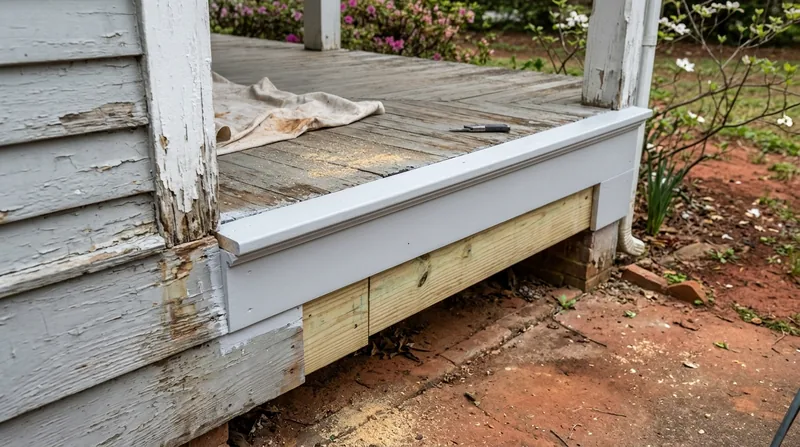




Wood rot and dry rot repair in Columbus demands a clear eye and honest carpentry. The Chattahoochee Valley's long, humid summers, heavy thunderstorms, and crawl spaces that hold moisture for weeks create the perfect conditions for decay in porch sills, deck framing, fascia, and the lowest courses of exterior siding. On the red clay hills where water oaks and loblolly pines dominate, wood that stays damp stays vulnerable. We cut out every soft section, treat the sound wood around it, and rebuild with rot-resistant lumber. That's a lasting repair, not a patch of filler that masks the problem for another season.
Why Wood Rot and Dry Rot Repair Matters in Columbus Homes
Columbus sits on the fall line where the Chattahoochee drops from the Piedmont toward the coastal plain, and that geography shapes every house on these hills. Greek Revival and Victorian homes in the Historic District along the river, Craftsman bungalows in Wynnton, brick ranches across Midtown, and newer subdivisions in Harris County all share one thing: wood that gets wet and stays wet. Eastern subterranean termites work through sill plates and crawl-space framing year-round, but moisture and decay are the larger threat. A porch that floods during heavy rain, fascia that never dries after a summer storm, or deck framing that sits in standing water will rot within 3 to 5 years if left untreated.
- Porch sills and rim joists absorb moisture from the ground and rain splash, creating soft wood that crumbles under a screwdriver.
- Deck ledgers and rim boards rot from both sides when water pools against the house and humidity prevents drying.
- Fascia and soffit boards in direct sun and rain fail faster than hidden framing, but the damage underneath spreads to roof structure and wall sheathing.
- Crawl-space sill plates and band joists decay silently until a sagging floor or soft subfloor alerts the homeowner to years of hidden damage.
- Storm-thrown pines and water oaks can split or crush framing and siding, exposing wood to years of weather and decay.
Catching rot early and removing only the soft wood saves thousands in structural repair later. See our guide to floor joist and subfloor repair in Columbus for details on how sagging floors develop and what repair looks like.
Key info: Columbus homeowners should have crawl spaces inspected every 2 to 3 years, especially after heavy rain or tropical storm remnants like Hurricane Michael in 2018. Moisture readings above 20% signal danger, and a pest inspection from a licensed pest control operator can confirm whether termites are active. For permit requirements on structural repairs, contact the Columbus Building Department at (706) 653-3700.
How We Repair Wood Rot and Dry Rot in Columbus
Our process starts with a clear diagnosis. We probe every suspect area with a screwdriver or awl to map the soft wood and understand how far the decay has spread. Sound wood stays; soft wood comes out. We cut back to solid fiber, treat the surrounding area with a wood preservative to stop the rot from advancing, and rebuild with pressure-treated lumber or naturally rot-resistant species like redwood or Douglas fir, depending on the location and the homeowner's budget.
- We identify all soft or spongy wood by probing and visual inspection, then mark the repair boundary.
- We cut out the rotted section with a saw or chisel, removing all discolored and soft grain.
- We treat the sound wood at the repair edge with a wood preservative to arrest any advancing decay.
- We sister new framing to load-bearing members like floor joists or rim joists, bolting or nailing the new wood securely to the old.
- We replace non-structural trim, fascia, and siding with new material that matches the existing profile and finish.
A porch sill repair in a Wynnton Craftsman home typically takes 2 to 3 days. A deck ledger repair in Lakebottom can run 1 to 2 days if access is easy, or longer if the rot has spread to the rim joist and we need to sister new framing. See our deck and porch repair page for more on exterior wood damage.
Example: A Rose Hill homeowner noticed soft wood in the porch sill after a heavy rain in July. We cut out 8 linear feet of rotted sill plate, sistered new pressure-treated lumber to the rim joist, and installed new trim and paint. Cost was $1,850. The porch was usable again within 3 days, and the repair will hold for 20+ years in normal conditions.
Repair Methods: Which Approach Fits Your Situation
| Approach | Description | Best for |
|---|---|---|
| Sistering new framing | Bolt or nail new lumber alongside the existing member to restore load-bearing capacity and prevent sagging. | Floor joists, rim joists, and load-bearing sills where the wood is still structurally sound on one side. |
| Full member replacement | Remove the entire rotted joist or sill and install new lumber, securing it to the adjacent structure. | Structural members where rot is too extensive to sister, or where space or access makes sistering impractical. |
| Trim and finish replacement | Remove rotted fascia, soffit, trim, or siding and install new material to match the existing profile and paint. | Exterior boards that have decayed but have not compromised the structural frame behind them. |
| Porch or deck beam repair | Sister or replace beams and ledgers, ensuring proper flashing and drainage to prevent future rot. | Attached porches and decks where the ledger or support beam has decayed from water pooling or poor drainage. |
| Crawl-space sill repair | Access the sill plate from below, cut out rot, sister new pressure-treated lumber, and install a vapor barrier to control moisture. | Hidden sill damage discovered during inspection or after water intrusion, where the rot has not yet reached the first floor framing. |
Each method preserves as much original wood as the structure allows. We never replace a joist or sill if sistering will solve the problem and cost less. Honest repair beats unnecessary replacement.
Wood Rot and Dry Rot Repair Cost in Columbus: What to Expect
A small porch sill repair runs from $650 to $1,200 depending on the length of the sill, the depth of the rot, and whether the rim joist needs attention. A full deck ledger replacement or a crawl-space sill repair typically costs $1,500 to $3,500. Larger jobs, such as replacing multiple floor joists or repairing a severely rotted beam, fall in the $3,500 to $8,000+ range. The main cost drivers are the amount of rotted wood, whether the repair requires sistering or full member replacement, access (some crawl spaces are tight), and whether the structural repair needs a permit and engineer sign-off.
We recommend getting 2 to 3 estimates before committing. A contractor who offers a firm price without seeing the damage in person is guessing. We charge no fee for an estimate, respond within 24 hours, and explain our findings and pricing in plain language. Call us at (762) 266-0693 or visit our pricing page for a full breakdown of typical jobs and what moves the cost up or down.
Delaying a wood rot repair does not make it cheaper. Soft wood spreads, structural members weaken, and a $1,200 porch sill repair becomes a $5,000 floor joist replacement. Address rot as soon as you find it.
Hiring a Carpentry Contractor Near Me in Columbus: What to Look For
When you call a carpentry contractor for wood rot repair in Columbus, ask for proof of current insurance and the name of the agent so you can verify coverage. Request references from recent jobs in your neighborhood, and call them. A contractor who has repaired porch sills or crawl-space damage in Wynnton or Rose Hill can speak to local soil, moisture, and seasonal patterns that matter to your repair. Ask whether the contractor has worked with your local building department and whether a permit will be needed for your job. Structural repairs like sistering joists or replacing a sill plate often require a permit, depending on the scope, and your building department can confirm.
- Check that the contractor carries general liability and workers compensation insurance and can provide a current certificate of insurance.
- Ask for at least three references from jobs completed in the last 2 years, and call them to ask whether the work held up and whether the contractor was reliable and professional.
- Confirm whether a permit is required by calling the Columbus Building Department at (706) 653-3700, and ensure the contractor is willing to pull it and coordinate inspections.
- Get a written estimate that lists the scope of work, materials, labor, timeline, and total price, with no surprises after work begins.
- Verify that the contractor uses pressure-treated lumber, rot-resistant species, or other durable materials appropriate to the location and exposure.
- Ask how the contractor will manage moisture and drainage after the repair to prevent rot from returning in 3 to 5 years.
A contractor who listens to your concerns, explains the pathology in plain language, and proposes repair before replacement is worth hiring. If you are ready to move forward, contact us for a free estimate.
Wood Rot & Dry Rot Repair in Columbus: Pricing Guide
| Service | Price | Details |
|---|---|---|
| Small porch or fascia repair | Starting at $650 | Up to 8 linear feet of sill, fascia, or trim, with minimal structural framing involved |
| Medium sill or deck ledger repair | Starting at $1,500 | Includes sistering new framing to existing rim joist or replacing 12 to 20 linear feet of sill plate |
| Large floor joist or beam repair | Starting at $3,500 | Sistering or replacing multiple joists, crawl-space sill damage, or repairs requiring structural engineer and permit |
| Complex or whole-structure repair | On estimate | Extensive rot across multiple members, unknown extent until inspection, or major structural alteration requiring engineering |
| Travel | Included | No separate mileage or call-out fee within Columbus and surrounding service areas |
| Free estimate | No obligation | Response within 24 hours at (762) 266-0693; we inspect the damage and explain repair options in writing |
Indicative pricing, the exact cost depends on square footage, finish, and site access. Free personalized estimate within 24h at (762) 266-0693.


