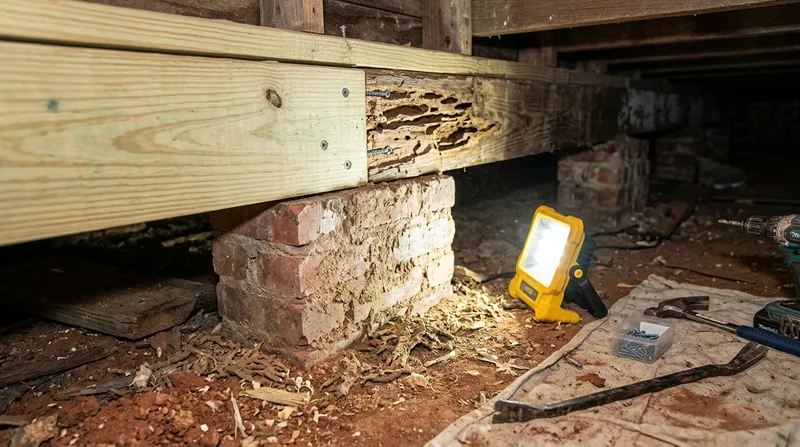




Termite damage repair in Columbus is a year-round priority in West Georgia, where eastern subterranean termites feed on sills and floor joists in crawl spaces and basements throughout the year. The Chattahoochee Valley's warm, humid climate and heavy seasonal rains create ideal conditions for termite colonies to thrive and for the wood they damage to soften further under moisture. Whether your home sits on the red clay hills of Wynnton, in the historic downtown district along the river, or in one of the newer subdivisions north of the city, termite damage follows the same pattern: colonies tunnel through structural wood from the soil up, weakening joists, sills, and studs until floors begin to sag or feel soft underfoot. We remove damaged wood, replace it with sound framing, and close the soil contact and moisture paths that let termites reach your home in the first place. The repair is permanent, the wood is solid, and your floor stands firm again.
Why Termite Damage Repair Matters in Columbus Homes
Columbus sits in prime subterranean termite territory. Unlike carpenter ants or carpenter bees that bore galleries into exposed wood, subterranean termites work from the soil, building mud tubes up sill plates and through rim joists to reach the structural wood inside your walls and crawl space. Once they establish a colony, they feed year-round in our warm climate, and the damage compounds quietly for months or years before a soft spot in a floor or a visible mud tube signals the problem. A home in Dinglewood or Bibb City with a crawl space is especially vulnerable, as are the raised porches and decks common to Victorian and Craftsman homes in the Historic District. The longer the infestation goes unaddressed, the more wood must be replaced, and the higher the cost of repair.
- We remove all termite-damaged studs, joists, sills, and subfloor and replace them with pressure-treated or solid lumber.
- We eliminate or seal the soil contact and moisture sources that allow termite colonies to reach the wood.
- We document the damage and repair scope for your insurance claim if you have coverage.
- We work from your pest inspection report, focusing on structural repair rather than treatment or extermination.
Addressing termite damage promptly prevents further structural deterioration and keeps your home safe and stable.
Key info: Eastern subterranean termites are active year-round in Columbus and the surrounding areas. A pest control professional's inspection report is essential before we begin repair work. We do not perform pest treatment or extermination, only the carpentry repair and structural restoration that follows a confirmed inspection.
For more information on structural wood damage and repair, see our wood rot and dry rot repair service, which addresses similar damage patterns from moisture and fungal decay.
How We Repair Termite Damage: Our Process in Columbus
Termite damage repair starts with a careful inspection of the affected area. We identify every piece of compromised wood, assess how far the damage extends into the structure, and determine whether repair or replacement is the right choice. In many cases, damaged joists or studs can be sistered (reinforced with new lumber bolted alongside) if the damage is partial and the wood still carries load. In other cases, the wood is too far gone and must be cut out and replaced entirely. We work methodically, never rushing the job, and we explain what we find and why we recommend the approach we do.
- We perform a detailed inspection of all damaged framing, joists, sills, and subfloor in the affected zone.
- We remove mud tubes and any remaining termite galleries to expose the full extent of the damage.
- We cut out all compromised wood and replace it with pressure-treated lumber or solid stock, properly fastened and flashed.
- We seal rim joists, sill plates, and crawl space vents to prevent future soil contact and moisture intrusion.
- We ensure all new framing is properly supported and level, restoring the floor or structure to its original condition.
The entire process is documented and photographed so you have a clear record of what was repaired and why.
Example: A 1920s Craftsman home in Wynnton with a crawl space had termites feeding on the rim joist and three floor joists. We removed the damaged joists, installed new pressure-treated 2x10s on the existing beam, re-leveled the floor, and sealed the crawl space vents with metal flashing. The floor is now solid, level, and protected. A similar job in a 1950s ranch in Benning Hills required only sistering of two joists where the damage was light, saving the homeowner the cost of full replacement.
For complex structural work or jobs that require load-bearing assessment, see our beam replacement and load-bearing wall removal service.
Termite Damage Repair Methods and Approaches
| Approach | Description | Best For |
|---|---|---|
| Joist Sistering | Bolting a new pressure-treated or solid joist alongside a partially damaged one to reinforce and share the load. | Light to moderate damage where the existing joist retains 50% or more of its structural capacity. |
| Full Joist Replacement | Removing the entire damaged joist and installing a new pressure-treated or solid joist on the same bearing points. | Severe damage affecting 50% or more of the joist or where the wood is too compromised to trust with sistering. |
| Sill Plate and Rim Joist Repair | Replacing the wood sill plate where it contacts the foundation and sealing or replacing the rim joist above it. | Termite damage at the base of the wall or crawl space where soil contact has allowed colonies to reach the framing. |
| Subfloor Patching and Replacement | Cutting out damaged subfloor sections and installing new plywood or tongue-and-groove boards, properly fastened and sealed. | Localized termite damage in crawl spaces or basements where the subfloor is soft, spongy, or has visible galleries. |
| Crawl Space Sealing | Installing metal flashing, sealing vents, and eliminating standing water and moisture sources to prevent future termite access. | All termite damage repairs, as prevention of future infestation is as important as the repair itself. |
Each approach is chosen based on the severity of the damage, the type of framing involved, and the structural demands of the home. We always explain why one method is better than another for your specific situation.
Termite Damage Repair Cost in Columbus: What to Expect
The cost of termite damage repair in Columbus depends on the scope of the damage, the number and size of joists or studs that need replacement, access to the affected area, and whether the repair requires sistering or full replacement. A repair starting at $1,200 might address a single damaged joist or a localized section of sill plate, including the labor to remove and replace the wood and seal the crawl space. Larger jobs, such as replacing three or four joists across a crawl space or addressing damage in multiple rooms, typically run $2,500 to $5,000 or more. Jobs requiring structural assessment or permits for load-bearing work are quoted on-site after a full inspection.
Several factors affect the final cost:
- The number of joists, studs, or sill sections that must be replaced or sistered determines the volume of labor and materials.
- Access to the damaged area affects how quickly we can work, whether we need temporary support or shoring, and the complexity of the repair.
- The type of wood and pressure treatment required influences material cost, especially if the repair involves load-bearing or exterior-facing wood.
- Moisture control and crawl space sealing add to the scope but prevent future infestations and are well worth the investment.
We always provide a written estimate before work begins, and we encourage homeowners to get two or three estimates from local carpenters so you can compare scope, method, and price. See our pricing overview for a more detailed breakdown of typical job costs and what drives them.
If your home has termite damage and you have homeowner's insurance, we can help document the damage and repair scope for your claim. Contact us at (762) 266-0693 for a free estimate, and we will provide a detailed report of what we find and what it will cost to repair.
Termite Damage Repair Near Me: What Columbus Homeowners Should Know When Hiring a Contractor
Finding a reliable carpenter for termite damage repair near Columbus requires checking a few key things before you sign a contract. Start by verifying that any contractor you consider is fully insured and carries both general liability and workers' compensation coverage, and ask to see a certificate of insurance. Request references from recent jobs in Columbus or nearby areas, and call those homeowners to ask about the quality of the work and whether the job was completed on time and on budget. Get written estimates from at least two contractors so you understand the scope of work, the method being used, and the timeline. Ask whether the repair will require a permit from the City of Columbus Building Department or Harris County, especially if the work involves load-bearing framing or significant structural alteration. Some older homes in the Historic District may also have HOA restrictions or historic preservation requirements, so confirm those before work begins.
- Verify full insurance coverage and ask to see a current certificate of insurance before hiring.
- Request and call references from completed jobs in Columbus or the surrounding area within the past two years.
- Get a written estimate that clearly describes what wood will be removed, what will be installed, and how the repair will be sealed or protected.
- Ask whether your job requires a permit and who is responsible for obtaining it from the local building department.
- Confirm that the contractor understands your home's specific structure, whether it is a crawl space, basement, or slab, and how that affects the repair approach.
A good contractor will take time to explain what they found, why they recommend their approach, and why it is the best solution for your home. They will not pressure you or dramatize the damage, and they will be clear about costs and timeline before the first nail is driven.
Ready to discuss your termite damage and get a free estimate? Contact Columbus Carpentry today at (762) 266-0693. We respond within 24 hours and provide a detailed inspection and written estimate at no cost or obligation.
Termite Damage Repair in Columbus: Pricing Guide
| Service | Price | Details |
|---|---|---|
| Single joist or sill section repair | Starting at $1,200 | Removal and replacement of one floor joist or sill plate section, including material and labor to seal the area |
| Multiple joist or subfloor repair | Starting at $2,500 | Two to four joists or significant subfloor patching, including sistering or full replacement and crawl space sealing |
| Full crawl space restoration | Starting at $4,500 | Extensive joist replacement, sill plate repair, moisture control, and venting work across the entire crawl space zone |
| Complex or load-bearing structural work | On estimate | Repairs requiring temporary shoring, beam assessment, or permit work must be evaluated on-site for accurate pricing |
| Travel and estimate | Included | No extra charge for travel within Columbus and surrounding service areas, and free written estimate within 24 hours |
Indicative pricing, the exact cost depends on square footage, finish, and site access. Free personalized estimate within 24h at (762) 266-0693.


