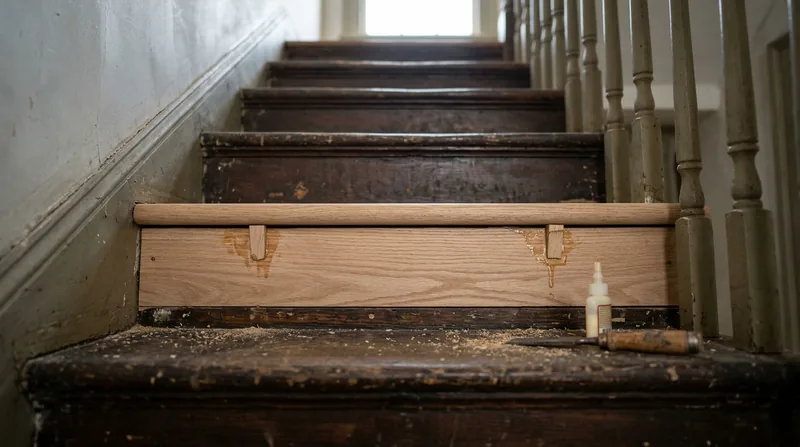




Stair and railing repair in Columbus is a common need in homes across the Chattahoochee Valley, from the 19th-century Greek Revival and Victorian townhouses downtown along the river to the 1950s brick ranches of Midtown and the newer subdivisions in North Columbus and Harris County. Squeaky treads, loose banisters, worn stringers, and sagging handrails turn up in every era of residential construction. We repair staircases, restore period railings, and install sturdy handrails that meet current code. Whether your home sits on the shaded hills of Wynnton or in the fast-growing neighborhoods near Fort Benning, stair and railing problems get worse with use and humidity. The longer they wait, the more structural damage can develop. We fix treads, tighten balusters, replace damaged stringers, and install railings that are both safe and period-appropriate for your home.
Why Stair and Railing Repair Matters in Older and Newer Columbus Homes
Columbus sits on the fall line where the Chattahoochee drops from the Piedmont to the coastal plain, and the climate here is long, hot, humid summers with mild winters. Heavy thunderstorms and occasional tropical remnants keep moisture high. In older homes, wood stringers, treads, and railings absorb that moisture and begin to move, warp, and loosen. In newer homes, fasteners work loose over time, and wood movement can cause squeaking and structural gaps. Loose stairs are a safety issue, especially in homes with children, elderly residents, or anyone with mobility concerns. A tread that shifts under weight can lead to a fall. A baluster that pulls away from the newel post leaves no grip when you need it most.
- We tighten and repair loose treads and risers before they create a safety hazard.
- We replace damaged stringers and support members to restore structural integrity.
- We repair or rebuild balusters, newel posts, and handrails to code and match your home's period style.
- We install new railings and handrails that meet current building code requirements for residential stairs.
- We repair stair damage caused by wood rot, termite activity, or age-related wear and settling.
Safe stairs are not optional in a home, and they should not be deferred. A repair done right now costs far less than a fall, a liability claim, or a complete stair replacement later.
Key info: The humid Chattahoochee Valley climate means wood movement is constant. A staircase built 50 or 100 years ago has settled and shifted; fasteners work loose, and wood fibers swell and shrink with seasonal humidity swings. This is normal, but it must be addressed to keep stairs safe and sound.
For guidance on stair and railing safety codes and permit requirements in Columbus, refer to the City of Columbus Building Department, which enforces the current International Residential Code (IRC) for all residential construction and repair work.
How We Repair Stairs and Railings in Columbus Homes
Our approach begins with a detailed inspection. We identify which components are loose, damaged, or failing. We check treads for rot or insect damage, examine stringers for structural soundness, test balusters and handrails for movement, and assess fasteners and joints. From that inspection, we build a repair plan that restores safety and function. For many stairs, repair is the right answer. For others, replacement of a single component or the entire run is necessary. We explain the condition plainly and recommend the most cost-effective path forward.
- We inspect the entire staircase for loose fasteners, wood movement, rot, and structural damage.
- We tighten or replace fasteners, glue loose joints, and reinforce stringers and treads as needed.
- We replace damaged treads, risers, or balusters with new wood that matches the existing stair in species and finish.
- We repair or restore handrails and railings to meet current code while preserving period character in older homes.
- We test all components for stability and safety before we call the job complete.
The goal is to hand you back a staircase that is safe to use and will not worsen over the next five years.
Local example: A 1920s Craftsman home in Wynnton had a second-floor staircase with creaking treads and a newel post that had pulled away from the wall. The stringers were sound, but fasteners had worked loose and the newel bolts had corroded. We re-fastened the treads, rebuilt the newel post base, and installed new bolts and blocking. The stairs are now quiet and solid, and the period character is unchanged. The repair cost less than half the price of a new staircase, and it will last another 20 years.
For homes with broader structural concerns, such as floor joist and subfloor damage, we can address those issues in tandem with stair repair to ensure the entire floor system is sound.
Stair and Railing Repair Methods
| Approach | Description | Best for |
|---|---|---|
| Fastener Tightening and Reinforcement | Re-fasten loose treads, risers, balusters, and handrails using screws, bolts, or lag fasteners appropriate to the wood species and existing construction. | Stairs that are sound structurally but loose due to fastener movement or corrosion. |
| Tread and Riser Replacement | Remove and replace individual treads or risers that are cracked, split, warped, or damaged by rot or insects. New wood is cut and finished to match existing stairs. | Stairs with localized damage to one or more treads while stringers remain sound. |
| Stringer Repair or Replacement | Repair cracked or rotted stringers by sistering (bolting a new member alongside the damaged one) or, if damage is severe, remove and replace the stringer entirely. | Stairs with structural damage to the main support beams that cannot be addressed by fastening alone. |
| Baluster and Handrail Repair or Rebuild | Replace loose or damaged balusters, repair newel posts, rebuild handrail sections, and install new railings to meet current code for spacing, height, and load capacity. | Railings that are loose, missing balusters, or do not meet current code; period homes needing period-matched railings. |
| Full Staircase Replacement | When stringers, treads, and railings are all compromised by age, rot, or structural failure, we build and install a new staircase in the same footprint and style as the original. | Stairs where repair would cost nearly as much as replacement, or where structural integrity cannot be restored by selective repair. |
Stair and Railing Repair Cost in Columbus: What to Expect
The cost of stair and railing repair in Columbus ranges widely depending on the scope of work. A simple tightening and fastener replacement might start at $600 to $900. A repair that requires replacement of one or two treads, balusters, or a handrail section typically runs $1,200 to $2,500. A stringer repair using sistering or partial replacement can range from $2,000 to $4,500. A full staircase replacement, including stringers, all treads and risers, balusters, and railings, can reach $5,000 to $10,000 or more, depending on the number of steps, wood species, and period detailing.
The main factors that affect price are the extent of damage, the number of components that need replacement, the wood species (Douglas fir and redwood cost more than pine or softwood), the complexity of period detailing in older homes, and the accessibility of the stairs for work. A staircase in a basement is faster to access than one in a tight upstairs hallway. A staircase with simple straight treads costs less to repair than a curved or spiral staircase.
The best way to get an accurate number is to request a free, no-obligation estimate. We visit your home, examine the stairs, and provide a detailed quote that includes labor, materials, and any necessary fasteners or blocking. We respond within 24 hours and can often schedule work within a week.
For a full breakdown of pricing across our carpentry services, visit our pricing page. If your stairs have rot or termite damage, that work may qualify for termite damage repair, which we handle as a separate service.
What to Look for When Hiring a Stair and Railing Repair Contractor Near Me in Columbus
Finding a qualified carpenter for stair and railing work in Columbus requires a few key checks. First, confirm that the contractor is fully insured and can provide proof of liability coverage. Second, ask for references from recent stair repair jobs in the area and follow up with those homeowners. Third, get written estimates from at least two contractors so you can compare scope, materials, and price. Fourth, clarify whether the contractor will handle any permits required for structural work or alterations to railings, and whether they are familiar with the building code requirements enforced by the City of Columbus Building Department.
- Confirm full insurance coverage and ask to see the certificate of liability before work begins.
- Request references from stair repair jobs completed in Columbus, Upatoi, Fortson, or nearby areas within the last two years.
- Get a detailed written estimate that lists all materials, labor, and the timeline for completion.
- Ask whether the contractor has experience with period homes and can match existing wood species, finish, and detail in older staircases.
- Clarify responsibility for permits and inspections, especially if the repair involves railing height, baluster spacing, or structural changes to the staircase.
- Check whether the contractor offers a warranty on workmanship and materials, and for how long.
Columbus Carpentry has been in business since 2016 and specializes in residential carpentry repairs across the Chattahoochee Valley. We work on stairs and railings in historic homes, post-war ranches, and newer construction. We handle the inspection, repair planning, material sourcing, and installation so you have one point of contact from start to finish. Call us at (762) 266-0693 for a free estimate, or visit our contact page to request an inspection.
Stair & Railing Repair in Columbus: Pricing Guide
| Service | Price | Details |
|---|---|---|
| Fastener tightening and minor reinforcement | Starting at $600 | Tighten loose treads, balusters, and handrails; re-fasten fasteners; minimal material cost. |
| Single tread or riser replacement | Starting at $1,200 | Remove and replace one to three treads or risers; includes new wood, fasteners, and finish matching. |
| Baluster or handrail repair and installation | Starting at $1,500 | Replace loose or damaged balusters, repair newel posts, rebuild handrail sections to code; labor and materials included. |
| Stringer repair or partial replacement | Starting at $2,500 | Sistering or replacing main support beams; most complex repair short of full staircase replacement; varies by damage extent. |
| Full staircase replacement | On estimate | Complete rebuild of stringers, treads, risers, balusters, and railings; requires on-site measurement and material selection. |
| Free estimate and response time | 24 hours | No obligation to book; detailed written quote includes materials, labor, and timeline for your specific stair condition. |
Indicative pricing, the exact cost depends on square footage, finish, and site access. Free personalized estimate within 24h at (762) 266-0693.


