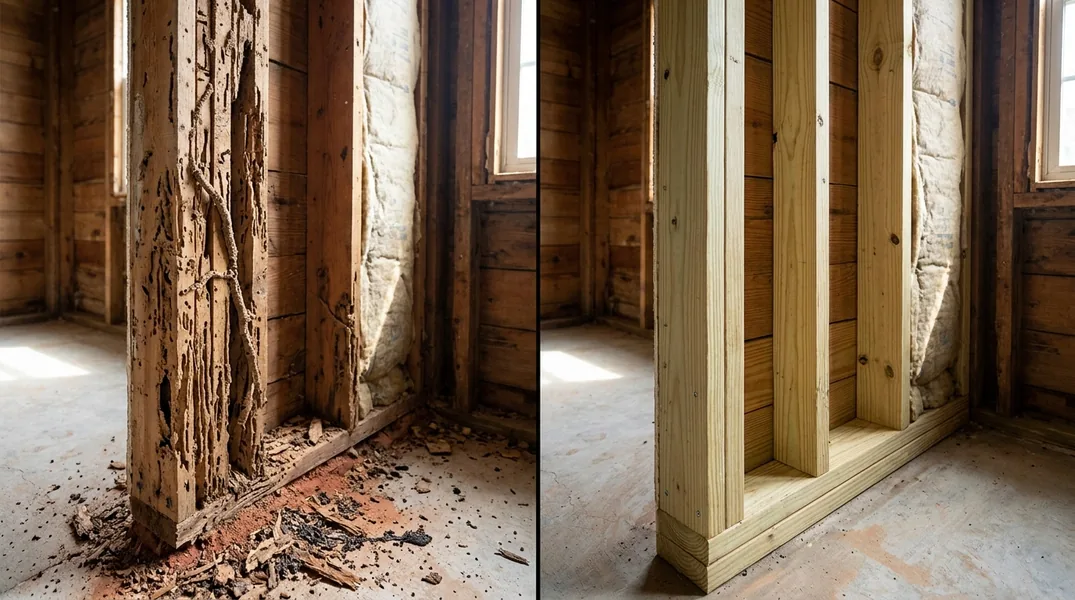
Repair or Replace? The Key Factors That Decide Your Best Option
When you discover rotted or termite-damaged wood in your home, the first question that comes to mind is usually the same: do I need to repair it, or will I have to replace the whole thing? The answer depends on several factors, and getting it right can save you thousands of dollars. As a homeowner in Columbus, understanding these factors before calling a contractor will help you make an informed decision.
The extent of the damage is the primary consideration. If wood rot affects only the surface or outer layers, Wood Rot & Dry Rot Repair through targeted treatment and reinforcement is often possible. However, when rot penetrates deeply into the structural integrity of the wood, or when the wood has lost its ability to bear weight, replacement becomes the safer and more cost-effective choice. Similarly, Termite Damage Repair depends on whether termites have created hollow galleries throughout the wood or only caused surface damage.
The location of the damage also matters significantly. Damage to decorative trim or non-structural siding is far easier and less expensive to repair than damage to foundation elements, beams, or floor systems. A piece of rotted fascia board can usually be repaired without replacing the entire roof system, but compromised floor joists may require more extensive intervention to ensure safety.
When Repairing Rotted Wood Makes Sense
Repairing rotted wood without replacing it is a viable option when the damage is caught early and remains limited in scope. Surface-level rot, where only the outer inch or two of wood is affected, can often be addressed through removal of the damaged section, treatment of the underlying cause (moisture, poor drainage, or inadequate ventilation), and reinforcement with epoxy fillers or sister boards. This approach preserves the original structure and costs significantly less than full replacement.
For homeowners in Columbus dealing with minor wood rot on exterior siding, window frames, or door jambs, repair can be the practical choice. A skilled carpenter can cut away the soft, damaged wood, treat the area to prevent future moisture intrusion, and patch it with new material that matches the existing structure. This method is particularly effective for cosmetic or semi-structural elements where full replacement would be unnecessarily disruptive and expensive.
Repair also makes sense when the cause of the rot is clearly identifiable and easily corrected. If rot developed because of a roof leak that has now been fixed, or because of poor grading that has been improved, then repairing the existing wood and preventing future damage becomes a smart investment. In these cases, the wood itself may be salvageable once the moisture problem is resolved and the area is allowed to dry thoroughly.
When Full Replacement Is the Only Safe Choice
There are situations where repairing rotted wood is simply not safe or practical. When rot has penetrated the core of a structural member, such as a beam, joist, or load-bearing post, replacement is necessary. Structural wood must maintain its full strength to safely support the weight of the building. Once wood has rotted deeply, no amount of patching or epoxy reinforcement can restore it to its original load-bearing capacity. Attempting to repair severely compromised structural wood puts your home and family at risk.
Similarly, if termites have tunneled extensively through a piece of wood, leaving it hollow or significantly weakened, that wood must be replaced. Termite Damage Repair in these cases involves complete removal and installation of new lumber that meets current building codes. The same principle applies to Floor Joist & Subfloor Repair, where even small areas of severe rot can affect the stability of your entire floor system.
When rot or termite damage affects multiple members or spans a large area, replacement often becomes more cost-effective than repair. Attempting piecemeal repairs on widespread damage can lead to repeated problems and escalating costs over time. In these situations, replacing the affected sections with new, treated lumber designed to resist future damage is the wiser long-term investment. This is especially true for exterior siding, where you might need to replace rotted wood siding panels to maintain both structural integrity and weather protection.
Wood Repair Cost in Columbus: What to Budget
Understanding pricing for wood repair versus replacement helps you make a financially sound decision. Repairs typically cost less upfront because they involve less labor and fewer materials. A simple wood rot repair on exterior trim might range from a few hundred dollars, while replacing that same section could cost significantly more depending on accessibility and the materials required. However, the cheapest option today is not always the best value over time.
Replacement costs depend heavily on the type and location of the wood. Replacing rotted wood siding can range from moderate to expensive, depending on whether you need to replace individual boards or an entire wall section, and whether the underlying structure has also been compromised. Beam Replacement & Load-Bearing Wall Removal represents a more substantial investment because it involves structural work, permits, and often requires temporary support systems during the replacement process.
Rather than guessing at costs, the best approach is to get a professional assessment. Columbus Carpentry offers a free estimate that includes a thorough inspection, honest recommendations about repair versus replacement, and transparent pricing. Call us at (762) 266-0693 to schedule your assessment. A qualified carpenter can identify hidden damage you might miss and help you understand the true cost of each option, allowing you to budget accurately and avoid surprise expenses later.
The Hidden Costs of Choosing Repair Over Replacement
While repair seems cheaper initially, it can lead to higher costs down the road if the underlying problem is not fully addressed. A repair that fails after a year or two means you will eventually need to replace the wood anyway, plus pay again for the failed repair work. If the moisture source that caused the original rot is not completely eliminated, new rot will develop in the same location or nearby areas. This cycle of repair and re-repair can ultimately cost more than a single replacement would have.
There is also a risk that a repair will mask deeper damage. When a carpenter removes damaged wood, they may discover that rot has spread further into the structure than was visible from the outside. A repair approach that addresses only the visible damage while ignoring hidden rot in adjacent framing can leave your home vulnerable. This is why professional inspection is so important. A thorough assessment reveals the full extent of damage and ensures that whatever solution is chosen, it actually solves the problem rather than postponing it.
Additionally, some repairs require ongoing maintenance or monitoring. A patched area may need periodic inspection and treatment to ensure it remains sound. Replacement with pressure-treated or rot-resistant lumber, by contrast, provides longer-lasting protection with minimal maintenance. When evaluating the true cost of repair versus replacement, factor in these long-term considerations, not just the initial invoice.
Wood Rot & Dry Rot Repair Near Me: When to Call a Professional
Deciding whether to tackle wood repair yourself or hire a professional depends on your skill level, the complexity of the damage, and the location of the affected wood. Minor surface repairs on non-structural elements, such as decorative trim or outdoor furniture, might be manageable for a confident DIYer. However, any repair involving structural elements, load-bearing walls, or extensive damage should be handled by a licensed professional. Mistakes in structural work can compromise your home's safety and may not meet local building codes.
Professional carpenters bring expertise that goes beyond simply cutting and patching wood. They understand how moisture moves through building assemblies, can identify the root cause of rot or termite damage, and know how to address it permanently. They also understand local building codes and can ensure that any replacement work meets current standards. If your repair project requires permits or inspections, working with a professional ensures the work is done correctly and documented properly.
If you are in Columbus and unsure whether your wood damage requires professional attention, erring on the side of caution is wise. Contact Columbus Carpentry at (762) 266-0693 for a professional evaluation. Our team can assess the damage, explain your options clearly, and provide honest recommendations based on what will actually solve your problem. Whether the answer is repair or replacement, we will help you understand the best path forward for your specific situation.
Looking for a professional carpentry contractor in Columbus? Columbus Carpentry responds fast for all your carpentry needs.
Get a Free QuoteOur services: Wood Rot & Dry Rot Repair · Termite Damage Repair · Floor Joist & Subfloor Repair