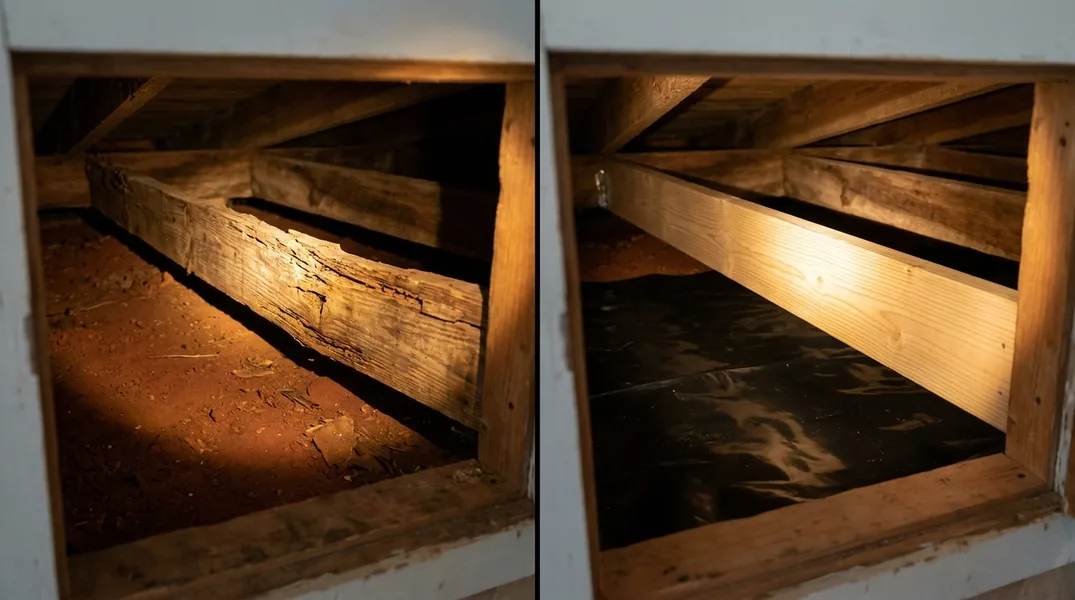
Why Your Floor Is Sagging: The Crawl Space Connection
If you've noticed your hardwood floors aren't quite level anymore, or you feel a slight bounce when you walk across certain rooms, you're not alone. Sagging floors are one of the most common structural complaints we hear from homeowners in Columbus. The frustrating truth is that most sagging floors don't start where you can see them. They begin in the crawl space, hidden beneath your home where moisture, pests, and time quietly undermine your foundation's support system.
The crawl space is essentially the forgotten basement of your home. It's dark, damp, and rarely visited unless something goes wrong. This environment is perfect for wood rot and structural decay to take hold. When floor joists (the wooden beams that support your floors) absorb moisture from the crawl space, they begin to weaken. Over months and years, this weakening becomes visible upstairs as floors that sag, creak, or feel unstable. Understanding why this happens is the first step toward getting your home back to level ground.
Common Crawl Space Problems That Cause Floor Sagging
Several conditions in your crawl space can trigger floor joist damage. The most common culprit is moisture. Crawl spaces naturally collect groundwater, condensation, and humidity. Without proper drainage or ventilation, moisture levels can climb to dangerous levels, creating the perfect breeding ground for wood rot. When floor joists absorb this moisture, they lose their structural integrity. The wood becomes soft, spongy, and unable to support the weight of your home effectively. This is why Wood Rot & Dry Rot Repair is so critical for maintaining your home's structural health.
Beyond moisture, Termite Damage Repair is another major factor in floor sagging. Termites are silent destroyers that can consume wood from the inside out, leaving joists hollow and weak. Inadequate support beams, undersized joists, or deteriorating posts can also contribute to sagging. In older homes, original construction may not meet modern building codes, and materials degrade over time. Some Columbus homes also suffer from settling or foundation issues that place uneven stress on floor joists, accelerating their decay.
Floor Joist Repair: What the Process Involves
When floor joists have been damaged by moisture, rot, or pests, repair isn't a simple patch job. Floor Joist & Subfloor Repair requires careful assessment and often involves replacing damaged sections or entire joists. The process begins with a thorough inspection of your crawl space. A professional carpenter will look for visible rot, soft wood, pest damage, moisture sources, and the overall condition of your support system. Once the extent of damage is determined, a repair plan is developed.
The actual repair work depends on how severe the damage is. In mild cases, damaged sections of joists can be reinforced with sister joists (new wood bolted alongside the damaged joist to share the load). More serious damage requires removing and replacing the entire joist. This work is done from below, in the crawl space, and requires proper support systems to keep your floors safe during the repair. After joists are repaired or replaced, the source of the problem must be addressed. This might mean installing crawl space drainage, improving ventilation, encapsulating the space, or treating active pest infestations. Without fixing the underlying cause, new damage will eventually develop.
Sagging Floor Repair Cost in Columbus: What to Budget
The cost of repairing sagging floors varies widely depending on the extent of damage, the number of joists affected, and the complexity of the repair. A simple reinforcement of one or two joists might cost between 800 and 2,000 dollars. However, if multiple joists need replacement or if your crawl space requires significant drainage or encapsulation work, costs can easily reach 5,000 to 15,000 dollars or more. The best way to understand what you'll actually pay is to request a free estimate from a qualified carpenter who can assess your specific situation.
When evaluating pricing for your repair, remember that this is an investment in your home's structural integrity and safety. Ignoring sagging floors can lead to more expensive problems down the road, including damage to walls, doors, and windows that become misaligned as the structure shifts. It can also create liability issues if someone is injured on an unstable floor. Addressing the problem early, when damage is less extensive, typically costs less than waiting until the problem becomes severe. Columbus Carpentry can provide a detailed breakdown of costs so you understand exactly what you're paying for and why.
When to Call a Professional for Floor Joist Repair Near Me
Not all floor issues require professional repair, but sagging floors almost always do. If you notice that your floors slope noticeably, feel spongy underfoot, or if you see visible cracks in your drywall (often a sign of structural movement), it's time to call a professional. Similarly, if you've spotted water damage, mold, or musty odors in your crawl space, don't wait. These are red flags that your floor joists may already be compromised. A professional inspection is the only way to know for certain what's happening beneath your home and what needs to be done.
Attempting to repair floor joists yourself is not recommended. This work requires proper training, equipment, and an understanding of building codes and structural engineering. Mistakes can result in an unsafe home and may violate local building codes. When you hire Columbus Carpentry, you're getting experienced professionals who understand the specific challenges that Columbus homes face. We know how local soil conditions, humidity, and climate patterns affect crawl spaces. We also handle more complex structural work like Beam Replacement & Load-Bearing Wall Removal when necessary. If you're concerned about your floors, reach out to us at (762) 266-0693 or contact us online for a comprehensive evaluation.
Preventing Future Floor Sagging: Crawl Space Maintenance
Once your floors have been repaired, the best investment you can make is preventing the problem from happening again. Crawl space maintenance is not glamorous, but it's essential. Start by ensuring your crawl space has proper drainage. Water should flow away from your foundation, not accumulate beneath your home. Installing a sump pump or improving grading around your foundation can make a huge difference. Ventilation is equally important. Your crawl space should have adequate airflow to prevent moisture buildup. In some cases, encapsulation (sealing the crawl space with a vapor barrier) is the most effective solution.
Regular inspections are also crucial. Visit your crawl space at least once or twice a year to look for signs of moisture, mold, pests, or wood damage. The earlier you catch problems, the less expensive they are to fix. Keep gutters clean and ensure downspouts direct water at least four to six feet away from your foundation. If you notice any soft wood, discoloration, or pest activity, address it immediately. By taking these preventive steps, you can avoid the costly repairs that sagging floors demand. Columbus Carpentry is here to help with both repairs and ongoing maintenance. Call us at (762) 266-0693 if you'd like professional advice on protecting your home's structural health.
Looking for a professional carpentry contractor in Columbus? Columbus Carpentry responds fast for all your carpentry needs.
Get a Free QuoteOur services: Wood Rot & Dry Rot Repair · Termite Damage Repair · Floor Joist & Subfloor Repair