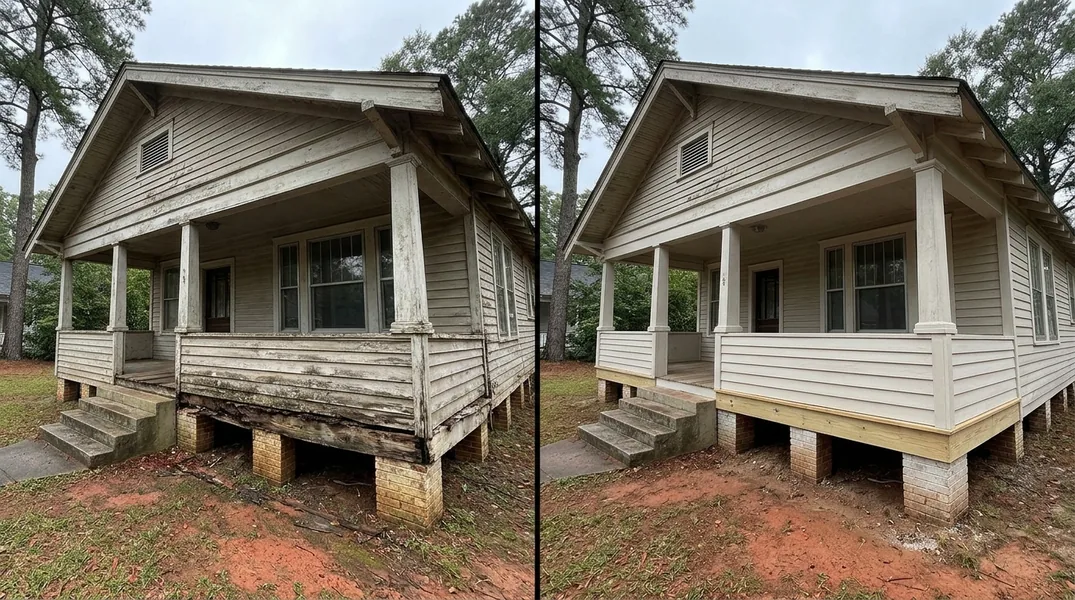
Termite Damage vs Wood Rot: Why the Difference Matters
If you own a home in Columbus, you've likely heard warnings about wood damage. But many homeowners don't realize that termite damage and wood rot are two distinct problems requiring different repair approaches. Understanding the difference is crucial because misidentifying the issue can lead to incomplete repairs, recurring damage, and costly structural failures down the road.
Both termites and wood rot compromise the structural integrity of your home, but they work in fundamentally different ways. Termites are living insects that actively consume wood as a food source, leaving behind specific patterns of destruction. Wood rot, by contrast, is a fungal decay process that breaks down wood fibers over time, typically caused by moisture exposure. The treatment strategies, prevention methods, and repair costs for each condition vary significantly. That's why getting an accurate diagnosis from the start is essential for protecting your investment.
What Does Dry Rot Look Like: Identifying Fungal Wood Decay
Dry rot is one of the most common forms of wood damage homeowners encounter, and recognizing what dry rot looks like is the first step toward addressing it. Despite its name, dry rot actually thrives in moist conditions. The wood affected by dry rot becomes brittle, darkens in color, and often takes on a grayish or blackish appearance. You might notice the wood shrinking, cracking in a distinctive cube-like pattern, or crumbling easily when you press on it with a screwdriver or similar tool.
One of the telltale signs of dry rot is the presence of fungal threads or mycelium, which appear as white, cotton-like growth on or beneath the wood surface. You may also spot fruiting bodies that resemble mushroom caps. The affected wood typically loses its structural strength and becomes soft or spongy to the touch. If you suspect dry rot in your Columbus home, especially in basements, crawl spaces, or around windows and doors, it's important to address it quickly because the decay spreads as long as moisture remains present.
Signs of Termite Damage: How to Spot an Active Infestation
Termite damage presents very different visual and structural clues compared to wood rot. When termites tunnel through wood, they follow the grain and create hollow galleries that weaken the structural framework from the inside out. One of the most obvious signs of termite damage is the presence of mud tubes, which are pencil-thin tunnels that termites build from the soil to your home's wooden structures. These tubes protect termites from air exposure as they travel between their colony and their food source.
Another key indicator of termite activity is the appearance of small holes in wood surfaces, often accompanied by sawdust-like droppings called frass. Unlike the cube-like cracking pattern of dry rot, termite-damaged wood typically remains hard on the surface while being hollowed out underneath. You might tap on affected wood and hear a hollow sound, or you could observe wood that appears intact but crumbles easily when pressure is applied. Swarmers (winged termites) emerging from wood in spring is a particularly alarming sign of an established colony. If you notice any of these wood damage signs in your home, professional Termite Damage Repair should be your next step.
Key Differences in Wood Damage Patterns and Progression
Understanding how termite damage and wood rot progress differently can help you respond appropriately. Termite damage typically spreads along the grain of the wood and follows established tunneling patterns. Termites are methodical feeders that create interconnected galleries, which means the damage can extend quite far before becoming visually obvious. The wood may look fine on the outside while being severely compromised internally. This makes termite damage particularly dangerous because structural failure can occur suddenly without adequate warning signs.
Wood rot, by contrast, spreads more uniformly and is usually easier to spot because the decay manifests on the surface. Rot progresses in concentric patterns and the affected area typically expands outward from the initial decay site. The rate of progression depends heavily on moisture levels and temperature. A basement or crawl space with persistent dampness will experience rapid wood rot development, while termite infestations can remain active and hidden for years. Both conditions require prompt attention, but the urgency and treatment approach differ. If you're uncertain which type of damage you're dealing with, a professional inspection can provide clarity and guide you toward the right repair solution.
When to Call a Professional: Wood Rot & Dry Rot Repair Near Me
While minor surface-level damage might seem manageable, structural wood damage almost always requires professional intervention. Wood Rot & Dry Rot Repair work is specialized because it often involves not just replacing damaged wood but also addressing the underlying moisture problem that caused the decay in the first place. Similarly, termite damage repair requires identifying the extent of the infestation, eliminating the termite colony, and then rebuilding compromised structural elements.
Columbus Carpentry specializes in diagnosing and repairing both wood rot and termite damage. Our team can assess the full scope of the problem, determine whether the damage affects critical structural components like floor joists or load-bearing elements, and recommend the most cost-effective repair strategy. If damage has compromised Floor Joist & Subfloor Repair needs or more extensive structural work like Beam Replacement & Load-Bearing Wall Removal, we have the expertise to handle it safely and effectively. Don't wait until damage becomes catastrophic. If you've noticed any of the warning signs discussed in this article, reach out for a free estimate or call us at (762) 266-0693.
Prevention Tips: Protecting Your Columbus Home from Future Damage
Prevention is always more cost-effective than repair. To protect your home from wood rot, focus on moisture control. Ensure gutters and downspouts direct water away from your foundation, maintain proper grading around your home's perimeter, and address any roof leaks immediately. Ventilate crawl spaces adequately, keep basements dry, and consider installing a sump pump if you experience water intrusion. Sealing cracks in the foundation and keeping wood-to-soil contact minimal also reduces rot risk significantly.
Termite prevention requires a different approach. Have your home inspected annually by a pest control professional, especially if you live in an area with a history of termite activity. Eliminate wood-to-soil contact by maintaining space between wooden structures and the ground. Remove dead trees, stumps, and wood debris from your property, as these attract termites. Fix water leaks promptly because termites are drawn to moisture. While these preventive measures reduce risk, they don't guarantee protection. If you ever suspect damage, professional inspection and timely repair are your best defense. Contact Columbus Carpentry today to discuss your home's condition and explore repair or prevention options tailored to your specific situation.
Looking for a professional carpentry contractor in Columbus? Columbus Carpentry responds fast for all your carpentry needs.
Get a Free QuoteOur services: Wood Rot & Dry Rot Repair · Termite Damage Repair · Floor Joist & Subfloor Repair